
Under the recommendation and guidance of His Eminence Kundrol Mongyal Lhasey Rinpoche, the Thousand Stars Foundation (Pandara) conceived the idea of building the Kundrol Dechen Great Stupa for Peace and Harmony (hereafter the Stupa) at Kundrol Dechen Ling in a mountainous area near Hua Hin, Prachuap Khiri Khan, 300 kilometers south of Bangkok, Thailand. The main purpose of the Stupa is to bring peace and harmony to the region, the country, the entire world and all lives.
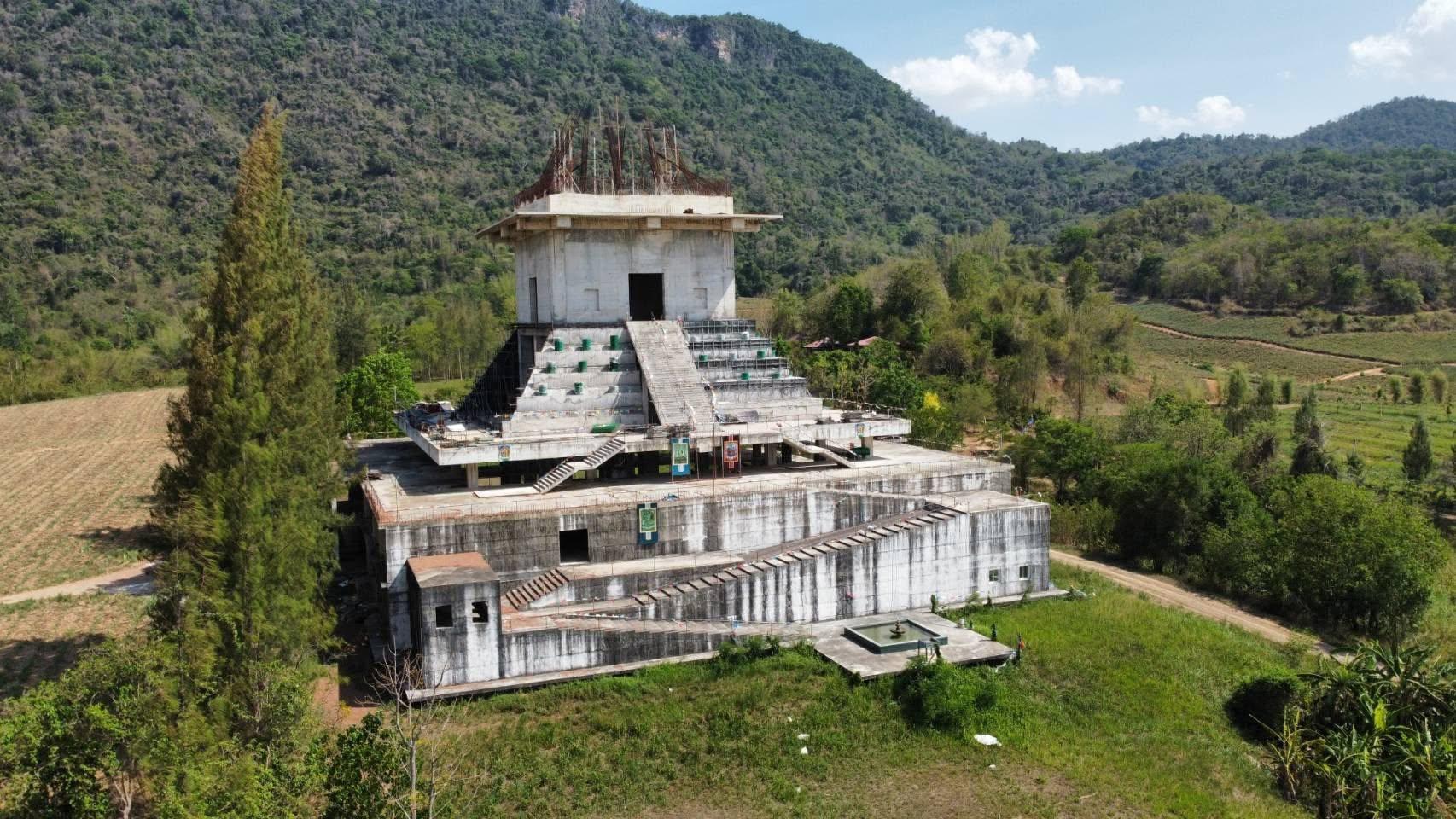
The Kundrol Dechen Great Stupa for Peace and Harmony
Great Stupa
Tibetan Stupa for World Peace in Hua-Hin, Thailand
The Roles and Purposes of the Great Stupa
01
The Kundrol Dechen Great Stupa
02
The Stupa's Functions
Once completed, the Stupa will function as a gompa (temple) in its own right. The Stupa will be a place for conducting Dharma activities that support practitioners on their paths of Awakening. The Stupa will house various statues of the Buddhas, Bodhisattivas and other wisdom deities. It will contain sacred substances, miniature stupas (tsa tsa) and particularly the relics of the enlightened ones.
03
The merits of building a stupa.
The construction of a stupa is likened to inviting the Buddha to reside in mid-air. Those who participate in the construction will receive immense blessings, including:
– Purification of the mind, reducing defilements and sorrows.
– Accumulation of merits, leading to happiness and success in both worldly and spiritual matters.
– Healing of the mind through the power of meditation and the pure energy of the stupa.
– Peace and happiness for oneself, family, and the land.
– Contributing to peace and harmony, eliminating conflicts, wars, and disasters.
– Perpetuating the Buddhist art and wisdom of the stupa, a spiritual heritage for humanity.
The Kundrol Dechen Great Stupa for Peace and Harmony
The Kundrol Dechen Great Stupa
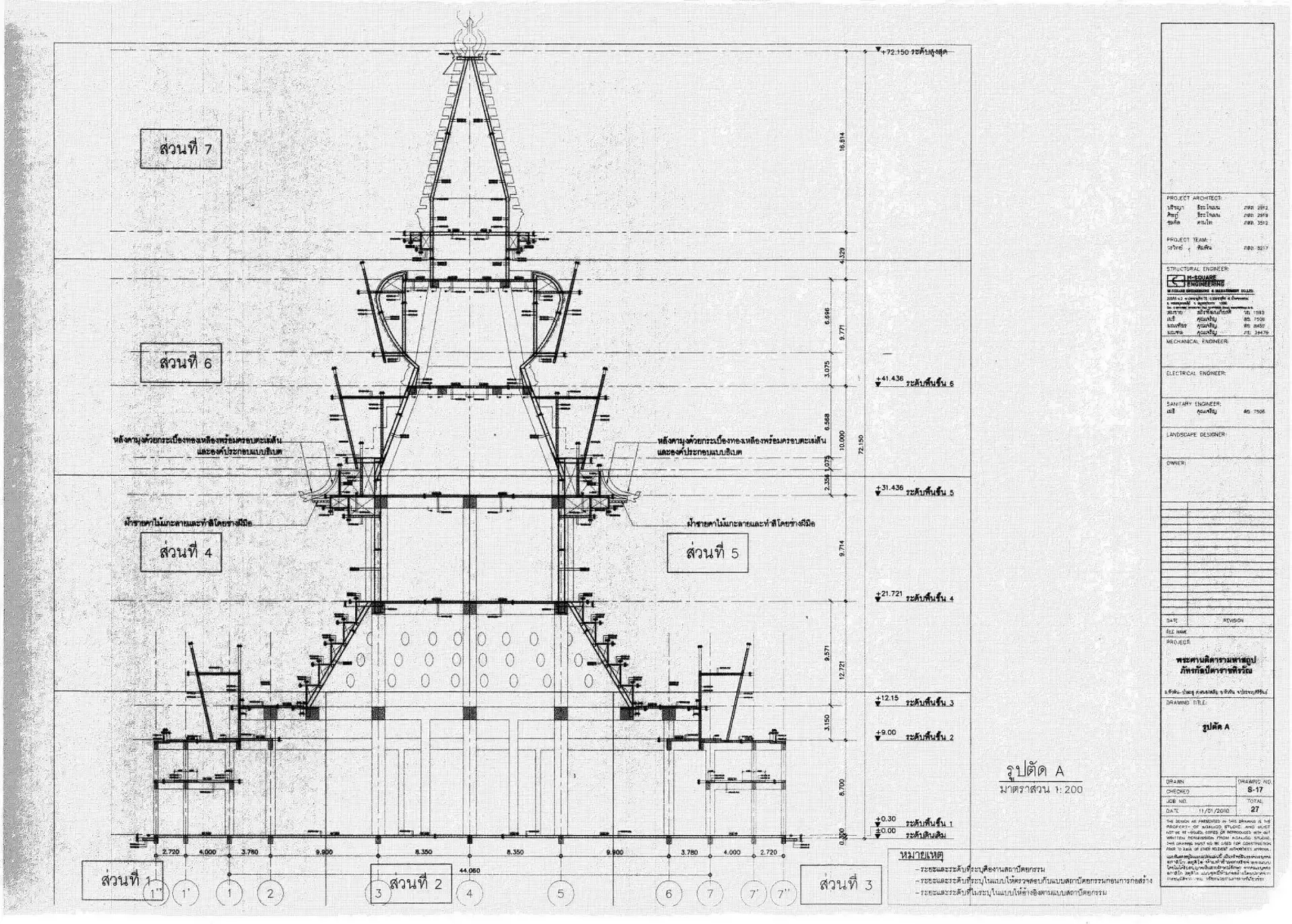
The Stupa is among the largest Tibetan stupas in Southeast Asia, and one of the largest outside Tibet. Its height is 73 meters and the base width is 30 meters. Its name in Thai emphasizes love and compassion, like Tara's noble qualities, and focuses on world peace, as well as happiness and well-being of humans and other beings.
Its design follows that of the Yungdrung Kölek Choten (Elegant Everlasting Stupa), which was recommended by His Eminence Kundrol Lhasey Rinpoche. As the Stupa is created exquisitely according to Tibetan art both in its external and internal architecture, once completed, it will serve as a living heritage of Tibetan-Himalayan-Zhang Zhung wisdom. In addition, it will be used as a college that promotes cultural knowledge and dharma education. As a source of blessings and inspirations, the Stupa will serve as a mind sanctuary to all who wish to undertake inner journeys and liberation from the cycle of birth and death. It will be open to all Buddhist and other spiritual traditions. The Stupa will remind us of how similar we are, and will take us closer to the pure and compassionate aspects of our natural mind.
Height
73 metres
Base width
30 metres
Buddhist Art
Yungdrung Bon
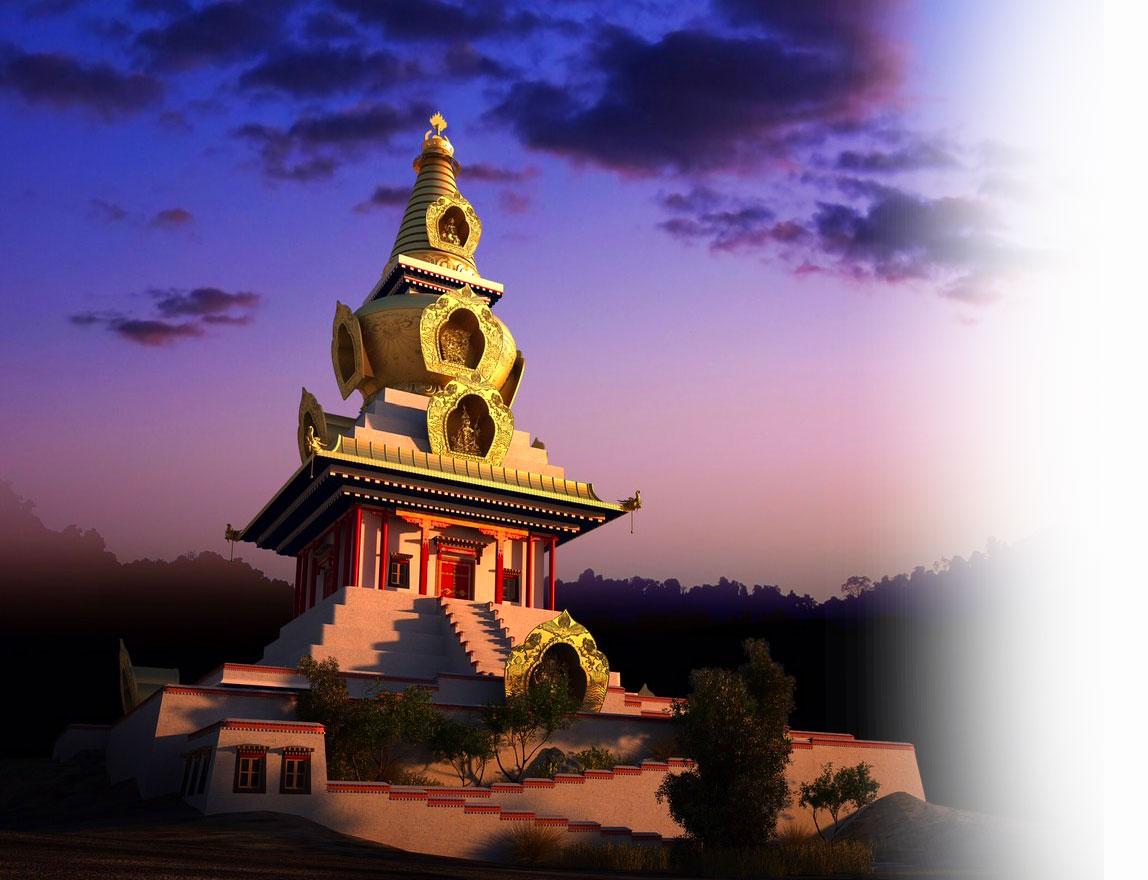
Auspicious structure and Dharma symbolism
1
The Stupa's Main Components and Symbolism
1. Mandala Hall and Learning Center at the Mezzanine Floor encompasses the four great chambers in the four directions housing various deities of the Tibetan Bon and Buddhist traditions.
2. Circumambulation and Prostration Courts
3. The Five Elements Base
4. Main Temple/ Meditation Hall, where the Four Noble Buddha statues (Desheg Dzowo Zhi) and a thousand Buddha images (Desheg Tong) are enshrined. The hall is a symbolic representation of rirab or sumeru, the center of the universe.
5. Four Immeasurable Base symbolizing four noble qualities that sustain the world: love, compassion, joy and equanimity.
6. Sacred Dome containing the relics and sacred substances related to the Buddha, Bodhisattvas, and realized masters.
7. Thirteen Bhumis representing thirteen stages in reaching enlightenment.
8. Flaming Sword and Two Horns symbolizing the eradication of all afflictions through the blazing of wisdom and the two truths.
2
Pure Land
Being a Buddha field, all merits and practices gained through circumambulation, prostration, mandala offerings, meditating, chanting and other meritorious activities contribute to peace of mind, and bring auspiciousness and prosperity to the land. They also protect us from disasters, obstacles, conflicts and violence, and lead to inner awakening.
3
Symbol of the Buddha's mind
A stupa symbolizes the enlightened mind of the Buddha. Its design represents the stages of the path to Enlightenment. Stupas are objects of worship, places of refuge and for accumulation of merits, and they are sources of positive energies contributing to peace of mind and happiness. Through the powers of noble aspirations, joyful efforts related to the construction, and the powers of meditation by the great masters and practitioners, stupas generate blessings which radiate in all directions, go beyond all limits, and remain for thousands of years.
“
May the blessings of the Buddhas of the Three Times provide you with happiness, good health and prosperity. May the merit of your perfections and that of wisdom help you and all beings gain liberation.
”
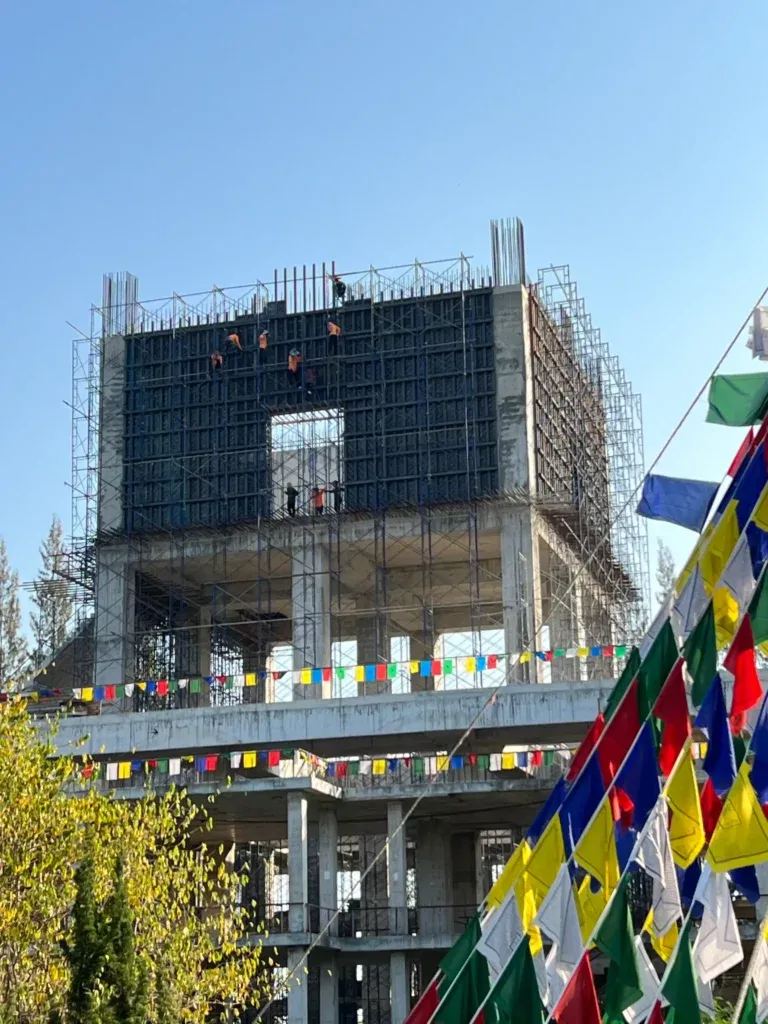
★ Sponsor the Great Stupa
Help Contribute to Our Mission
A donation to help us complete this phase as well as continue our work until the whole stupa is built is highly appreciated. You can do so by donating any amount for the stupa in particular, or by applying to be a patron member of the foundation.