ABOUT US
About Us
Founders & Teachers
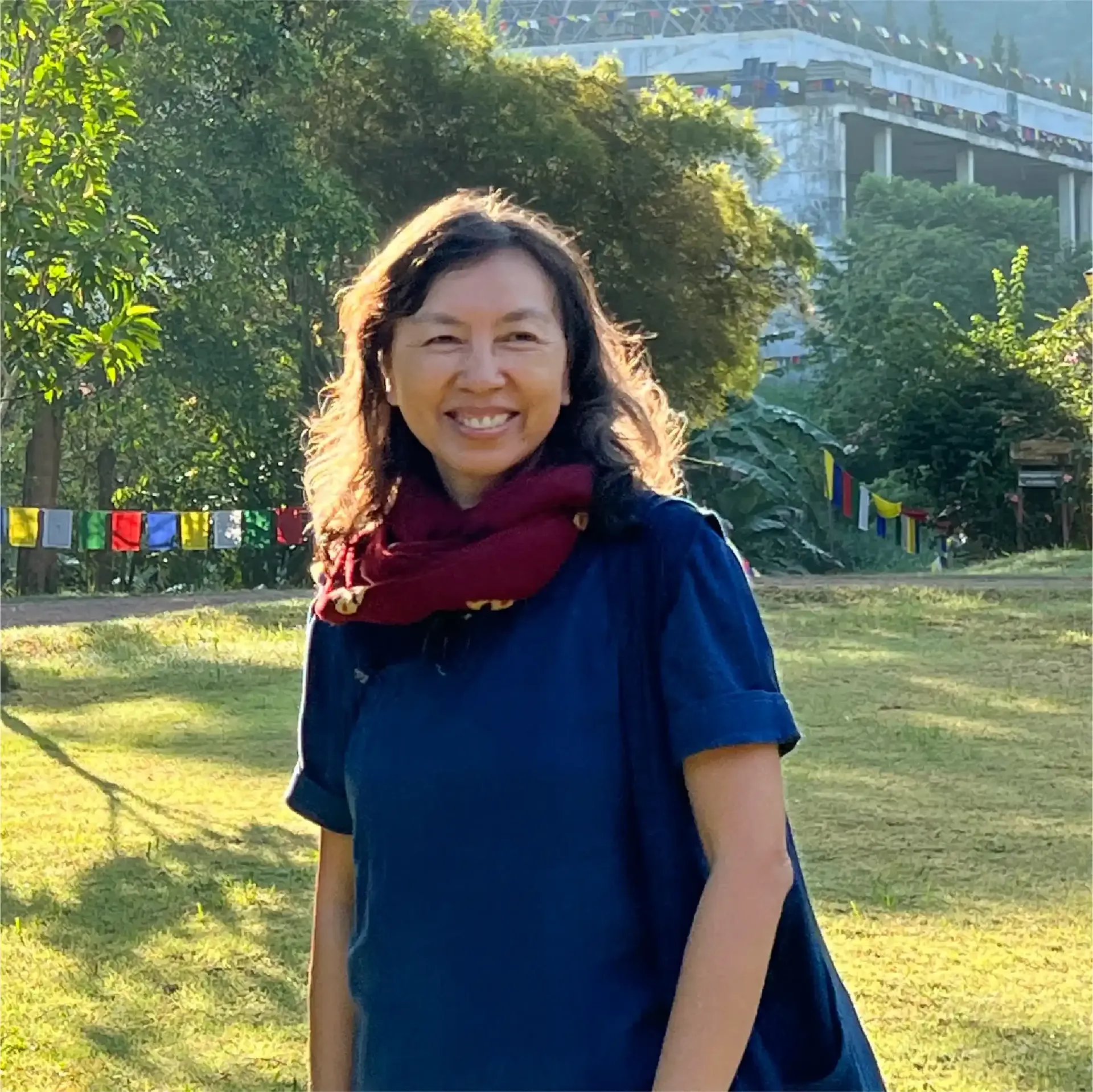
Assoc. Prof. Dr. Krisadawan Methavikul (Kalsang Dawa)
Tibetologist and expert of Tibetan Buddhism, particularly Yungdrung Bon. Former associate professor of linguistics from Chulalongkorn University, she founded Pandara (the Thousand Stars Foundation) and Kundrol Dechen Ling, a Tibetan retreat center in Hua-Hin, Thailand. The center fosters Buddhist and Bon art, and preserves Tibetan and Zhang Zhung cultural heritage. Krisadawan received her Ph.D. in 1993 from Indiana University, where she studied the Tibetan language and acquired expertise on Tibetan studies. She conducted several research projects concerning sociolinguistic aspects of Tibetan. While working at Chulalongkorn University, she published extensively and served as researcher in an International Workshop on Emancipatory Pragmatics in Japan. In 2007 Krisadawan left the academic career to devote her full time to the practices, to the establishment of Kundrol Dechen Ling and for building the Great Stupa for Peace and Harmony.
Currently, she is a meditation teacher and serves as Pandara’s president. She published several books on Tibetan Buddhism and is an active pilgrim in Tibet where she did two prostration pilgrimages in Central Tibet and circumambulated Kang Tise (Mt. Kailash) seven times. During 2015 – 2018 Krisadawan entered the Zhang Zhung Dzogchen College at Tokden Monastery, Amdo province, eastern Tibet, where she received the empowerments, oral transmissions and instructions of the Tummo and Dzogchen cycles from His Eminence Tsulchen Thegchok Tempe Nyima Rinpoche. She practiced them all in retreats both at Kundrol Dechen Ling and at Tokden. She is the first woman who completed the study and practice from this College, which was established during Drubwang Shardza Tashi Gyaltsen ‘s 6-month stay at Tokden.
One of the most important projects which Kalsang Dawa has carried out, under the blessings, inspiration and guidance of her deceased root master Kundrol Mongyal Lhasey Rinpoche, concerns the construction of the 73-meter great stupa for peace and harmony at Kundrol Dechen Ling. Once completed, the stupa will serve as a temple, meditation hall, college, and a living heritage of Tibetan and Zhang Zhung ancient wisdom, art and architecture.
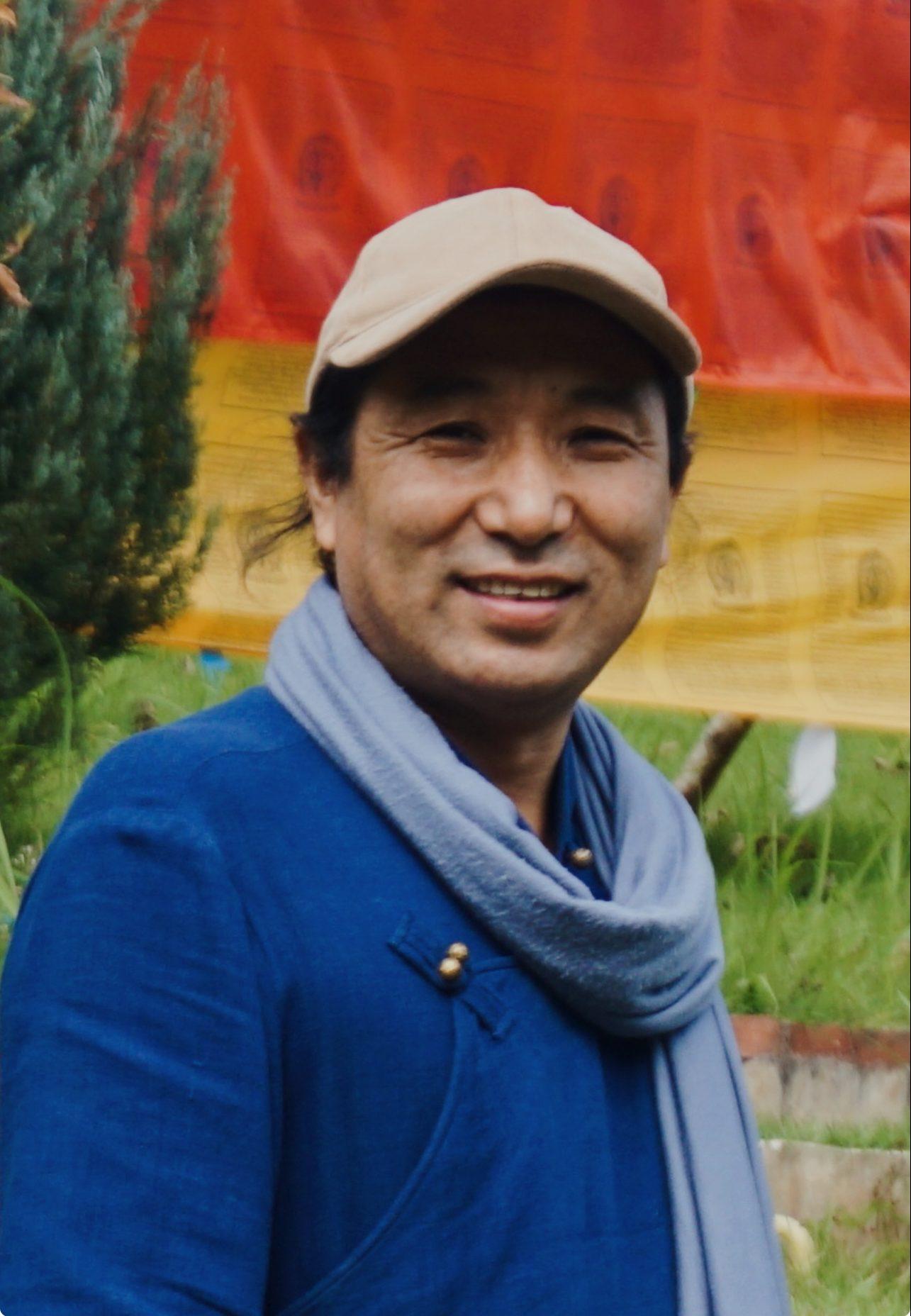
Aj. Meu Yonten Tongdrol
Aj. Meu Yonten Tongdrol was born into the Meutsang family, one of the most important spiritual lineages of the Yungdrung Bon tradition. At the age of nine, he was ordained as a monk at Tokden Monastery in Ngawa, Amdo. He was raised under the loving care and guidance of his uncle, Yongdzin Sopa Rinpoche, a direct student of Shardza Tashi Gyaltsen Rinpoche.
Aj. Meu Yonten received transmissions, empowerments, and teachings from several great masters, including Triwa Jamyang Khyentse Rinpoche, and especially Tsulchen Thegchog Tempe Nyima Rinpoche, who taught him tantric and Dzogchen texts and imparted to him a knowledge of Tibetan poetry.
For several years, Aj. Meu Yonten served as editor of Gangri Osal, Tokden Monastery’s journal, and also worked as the monastery’s secretary. He later moved to Chengdu to pursue further studies in Chinese and English at Southwest University for Nationalities.
In 2005, he came to Thailand, where he helped establish Kundrol Dechen Ling, a meditation center supported by the Thousand Stars Foundation. He completed the three-year retreat program at the Zhang Zhung Dzogchen College at Tokden Monastery and is now a beloved teacher of Tibetan Buddhism. Together with Dr. Kalsang Dawa, he shares full responsibility for building the Kundrol Dechen Great Stupa for Peace and Harmony.
Our Linage
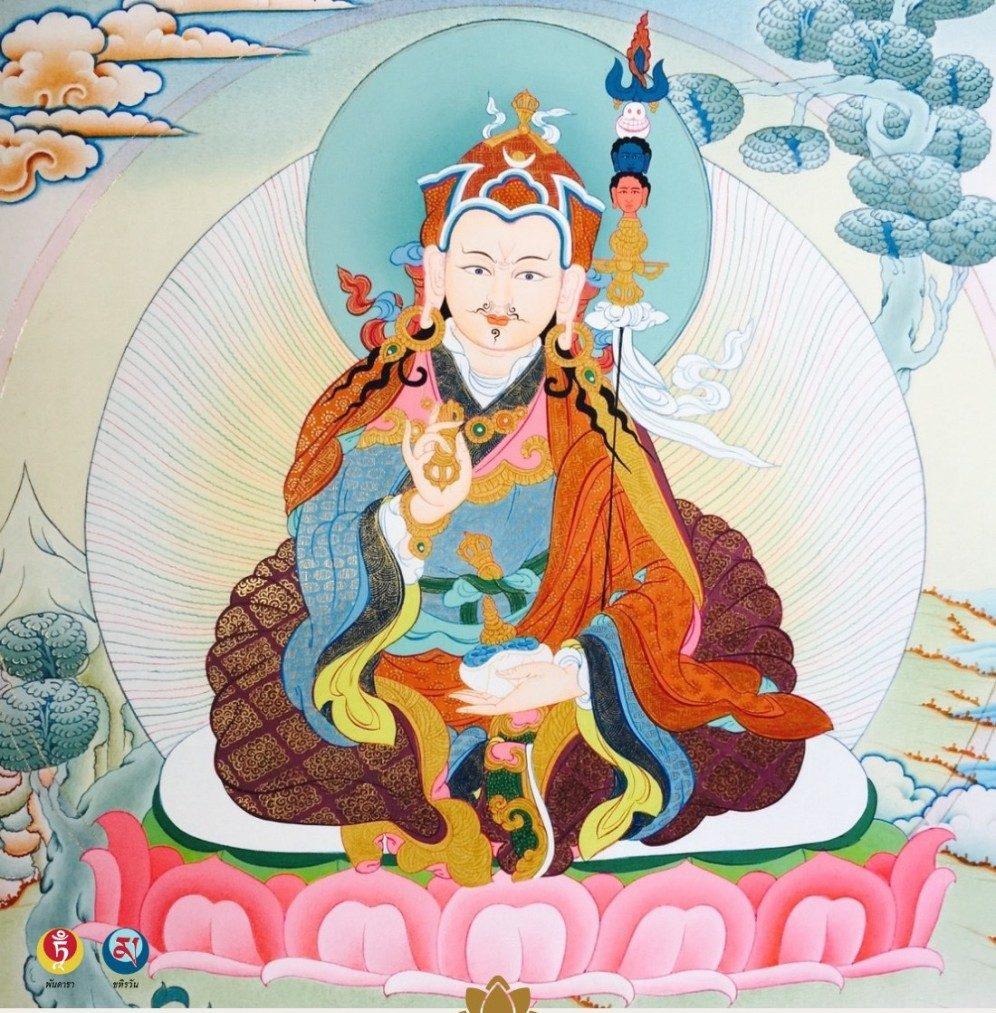
Guru Rinpoche
Guru Rinpoche (the "Precious Master"), also known as Padmasambhava, is the 8th-century Indian master who legally and spiritually established Buddhism in Tibet. He is revered as the "Second Buddha" across the Himalayan region and is the foundational figure of the Nyingma school (the oldest tradition of Tibetan Buddhism).
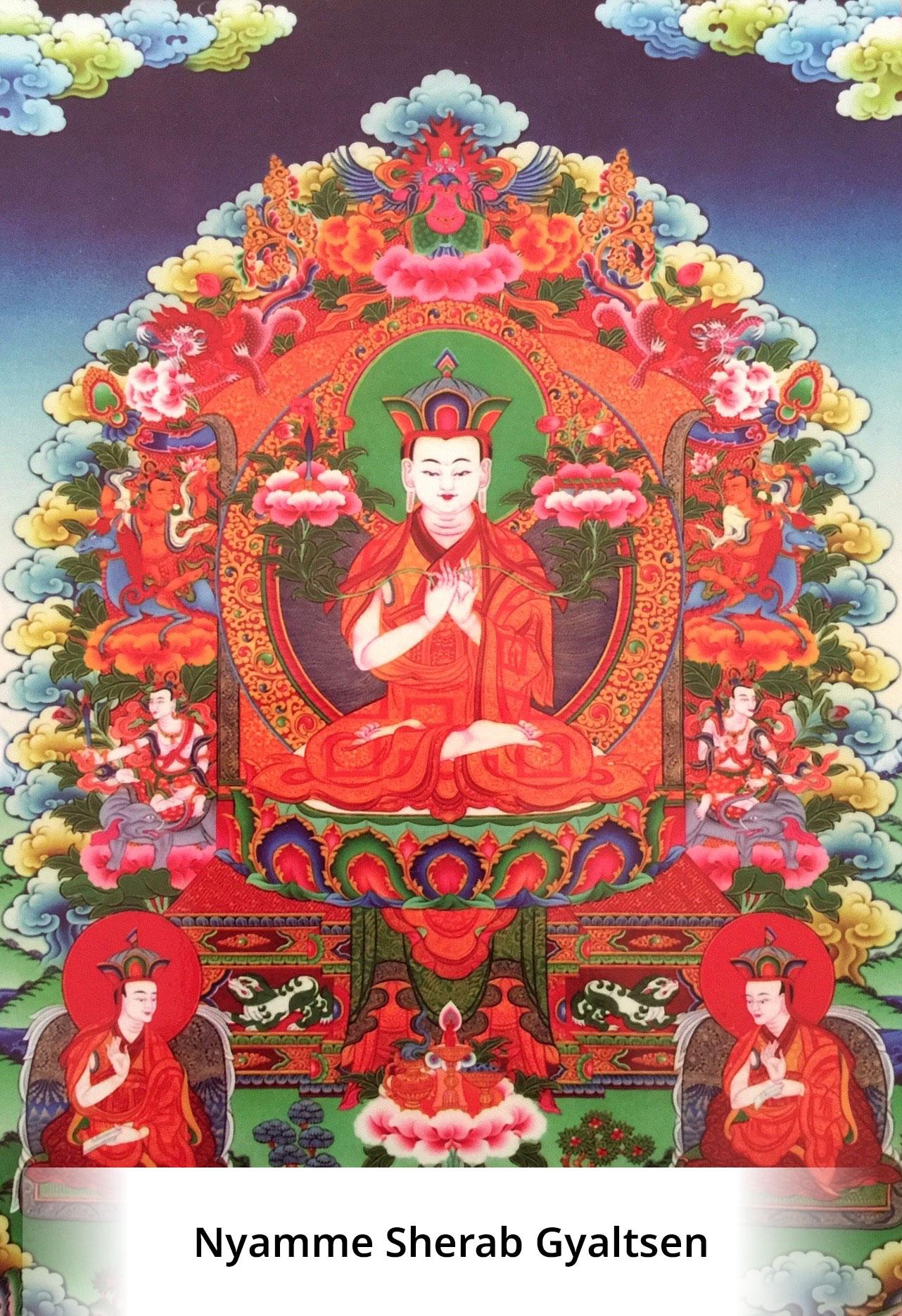
Nyamme Sherab Gyaltsen (1356-1415)
Considered a manifestation of the Wisdom Deity and the second Buddha, Nyamme Sherab Gyaltsen was one of the most important Bon scholar and master. After the great monastery of Yeru Wensakha was destroyed by flood in 1386, he founded Tashi Menri Ling in Tobgyal, Tsang province of Central Tibet in 1405. The monastery became the most important Bon learning center of Tibet.
Nyamme Sherab Gyaltsen was born in the Fire Monkey year, 1356 in the village of Tegkyog, Gyalrong region, which borders southern Amdo Tibet and far western China. His father Lugyal of the Dra Clan was an expert of the four Causal Bon teachings, and his mother Rinchen Men bore many characteristics of a dakini.
From early childhood, he was recognized as an extraordinary child: without studying, he could recite mantras, remember and learn spiritual texts easily and was also self-aware. At the age of 10, he took novice vows from Chala Yungdrung Gyeltsen who gave him the name Sherab Gyeltsen. He then studied the three stream teachings of Bon with numerous renowned masters in Dokham and Nyarong. With great devotion he practiced and learned mainly from the teaching tradition of Yeru Monastery, and also by following the Great Master Rinchen Lodro.
Nyamme Sherab Gyaltsen practiced with such zeal the teachings of his master that, when back in Kham, he is said to have had the meditative realization known as "samsara and nirvana having a single flavor." He later made a second trip to Tibet during which he met the great
Buddhist master Rongton Sheja Kunkhyen (1367-1449), with whom he studied Madhyamaka, Prajñāpāramitā, Vinaya, Abhidharma and, in particular, Logic.
Nyamme Sherab Gyaltsen received complete transmission of empowerment, oral transmission, and oral instruction of the three main streams of Bon teaching. He received fully-ordained monks’ vows at the age of 31 and entered into the Yeru Monastery in Tsang province. By participating in many other well known Buddhist institutions and monasteries, he became very well known in Tibet and was recognized as a great full wisdom scholar. During his stay in the Yeru Wensakha monastery, he took charge of one of the schools. He also became a tutor of two royal sons of Dru lineages and was enthroned as the successor of Kunga Wangden the famous master of the Dru lineages. With his work he preserved and spread the outer, inner and secret teachings of Bon. From that time and continuing today, every monastery follows equally the exact same clear knowledge of the ancient system of monastic laws brought to life by Nyamme Sherab Gyaltsen.
In 1405, at the age of fifty, Nyamme Sherab Gyaltsen founded Tashi Menri Monastery on the mountain range. Bon protectors guided him where exactly to build Menri Monastery. With support and miraculous powers, he built the whole structure of Menri Temple with monks’ living quarters. He decided to preserve there the traditions and teaching system of the destroyed Yeru Wensakha monastery. Tashi Menri Ling Monastery soon became the Mother monastery of Bon.
Nyamme Sherab Gyaltsen became the crowning ornament of Bon for his mastery of text, systems, and rules. There really isn’t any text that he did not teach or write about in all the three transmission lineages of Bon. He passed away at the age of 60, leaving behind many great scholars and practitioners.
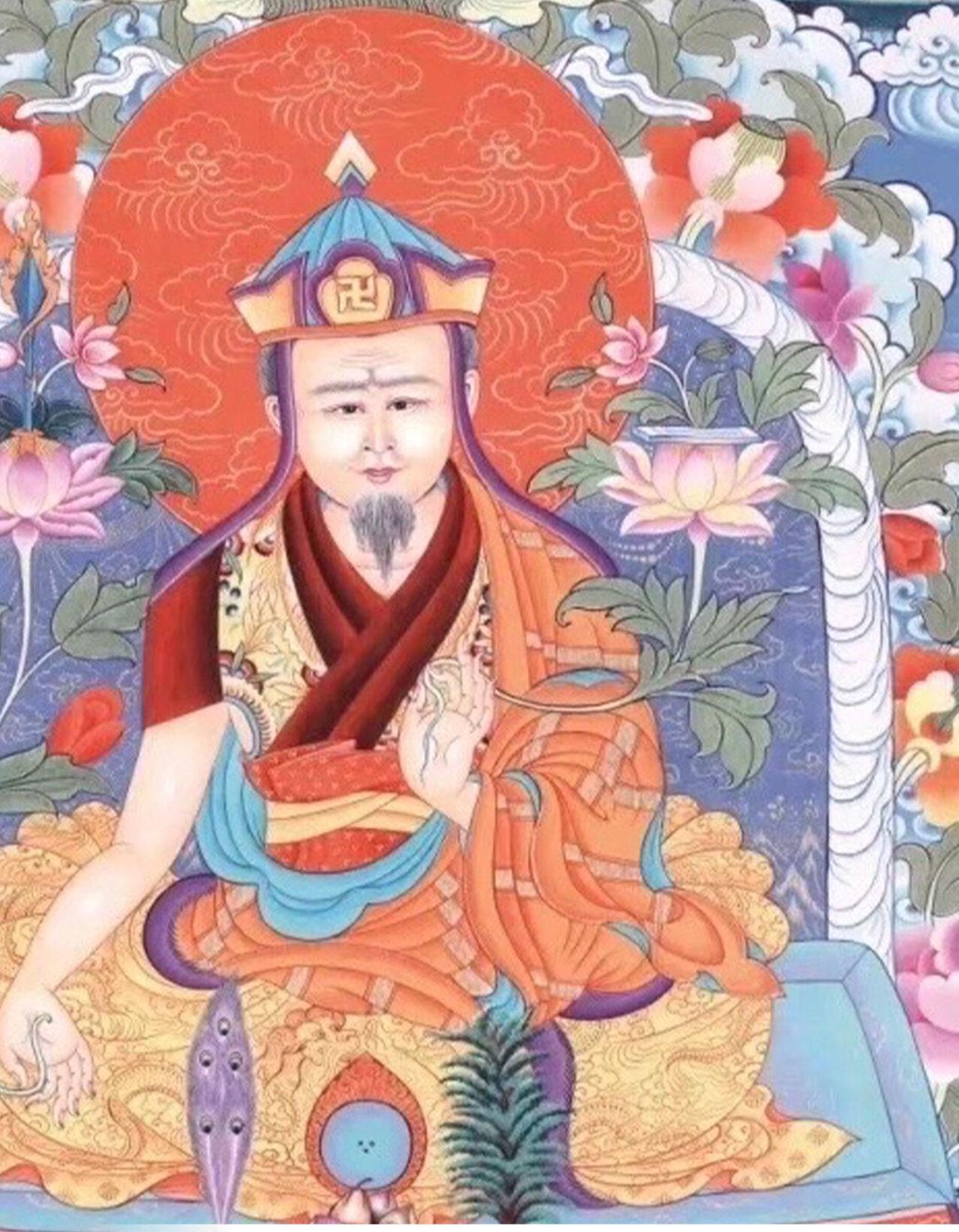
Drubwang Shardza Tashi Gyaltsen (1859 - 1934)
In general, there are 3 sections to a master's biography:
1) The external (which is also the general biography),
2) The internal biography
3) The esoteric biography.
Here, only the "general biography” is described, but in it there are some parts which concern the specific internal and esoteric aspects as well.
There are 8 sub-divisions of the external biography:
1) His birth
2) How he began learning the religious path
3) How he began thinking and practising, according to the path of Yungdrung Bön
4) How he received teachings, initiations and vows
5) How he practised in solitude
6) How he worked for the doctrines of Tönpa Shenrab and for the benefit of all beings
7) The teachings and works he left behind
8) How he manifested his great knowledge as, a rainbow body.
1) His birth:
The name of the village in which Shardza was born is Da .(brda), in the foothills" of that place. His father ,belonged to the clan of Hor(hor), and was called Tashi Ga (bkra shis dga') and, his mother was called Boleg (bo legs). He was born on the 8th day of the 3rd month of the Earth sheep year 1859. Shardza Tashi Namgyal attained the Rainbow Body in the year of 1934.
2) How he began learning the religious path:
Tenzin Wangyal recognised that the boy had a very long-lasting connection with him over many past lives. So he was very kind to this boy from the beginning and the boy was always very devoted to him. When the child was born, he had blessed him with long life. After the boy became older, he took the refuge vow from Tenzin Wangyal, who prayed that the boy would become beneficial to all sentient beings. Thus he gave the boy, the name Tashi Gyaltsen
3) How he began thinking and practising, according to the path of Yungdrung Bön:
When he was young, he kept the vow of refuge and other simple vows very strictly. Everyone praised his man¬ner of keeping the vows. When he was older, the abbot of Yungdrung Ling (gyung drung gling), whose name was Kelzang Nyima Togi Gyaltsen (skal bzang nyi ma tog gi rgyal mtshan), came to Kham. He was invited to Dza Tengchen Gonpa (rdza steng chen dgon pa), the boy's monastery. There, many people took their vows from this abbot, and each received a name at the same time. When it came to Shardza, he received the name Tenpa Drudrag (bstan pa 'brug grags) from the abbot, who repeated the name three times. All those who were taking the vows burst out laughing loudly. The abbot said that it was a very auspicious sign, and that the boy would become a great master.
The reincarnation of Tazhig (stag zhig), whose name is Shengyal Tenzin (gshen rgyal bstan 'dzin), came to the Dzakog (rdza khog) country upon the invitation of Shardza's monastery. He was the holder of the Vinaya vows of the Menri (sman ri) lineage.
In front of the:
a) Abbot
b) Lopon (slob dpon) or teacher,
c) Witness,
d) Interpreter
From all 4 who were high monks, Shardza took the highest and final Vinaya vows.
He kept his original name, Tenpa Drudrag, and additionally received the name Drime Nyingpo (dri med snyingpo).
From that time onward, he never took any alcohol, never ate meat nor wore the skin of animals and he conducted himself completely according to the Vinaya rules. Altogether he observed 250 vows.
The vow of Bodhicitta:
Which he took from Samten Yeshe (bsam gtan ye shes). At the same time, he received the name Gyalse Zhenpen Norbu (rgyal sras gzhan phan nor bu). He practised the 2 kinds of Bodhicitta: one that is according to the absolute truth, and the other according to the relative truth. When he took the vows, he offered 100.000 of butter lamps, flowers, incense and tormas (ritual cakes). From then on, he always kept the vows precisely and paid attention to all details. In the tradition, different texts mention different vows as part of the bodhicitta vow. Some mention 20 vows, some mention an extended form of 360 vows, some mention a medium form of 108 vows and some 28 vows. These vows can be described as the 4 kinds of bodhicitta vows, all of which Shardza practised. In addition he also practised the 10 perfections.
The Tantric Vows:
Shardza took the tantric vows from his root master, Tenzin Wangyal. He took the initiation of the Yidam called Walse Ngampa (dbal gsas rngam pa). At the time of the initiation, he was introduced to the nature of mind, the 4 initiations of the yidam and the initiation of Dzogchen called Gyaltab Chilug (rgyal thabs spyi lugs).
In the tantric vow, there are 5 root vows and 25 branch vows for the Kyerim (bskyed rim), and 5 root vows and 100 branch vows for the Dzogrim (rdzogs rim).
In Dzogchen, there are 30 vows. Shardza kept all these vows carefully and clearly. In the Bönpo tradition, all the vows mentioned above are those that can be taken by a person who can take all 3 types of vows, which he did.
From another master called Rigdzin Tsewang Dragpa (rig 'dzin tshe dbang grags pa) who was also known as Dechen Lingpa (bde chen gling pa), he received the initiation of the peaceful and the wraththful form of the same yidam, Walse Ngampa. Also he received the Dzogchen initiation of Rigpai Tselwang (rig pa 'i rtsal dbang), as well as the preliminary and essential teachings of Atri (A khrid), besides many other tantric initiations.
Altogether Shardza had 24 teachers, from whom he learned different subjects. Usually in those days people were satisfied after learning from one or two masters. But Shardza was special. He continued to seek and learn all the time. To the following masters he offered all his wealth and from them he received all the teachings of different subjects, initiations and transmissions.
1. Dzatrul Tenzin Wangyal (dza sprul bstan 'dzin dbang rgyal)
2. Dechen Lingpa (bde chen gling pa)
3. Dudul Lingpa (bdud 'dul gling pa)
4. Samten Yeshe (bsam gtan ye shes)
5. Shengyal Tenzin (gshen rgyal bstan 'dzin)
6. Tsewang Gyurme (tshe dbang 'gyur med)
7. Rinchen N amgyal (rin chen rnam rgyal)
8. Kelzang Nyima (bskal bzang nyi ma)
9. Meton Nyima Gyaltsen (me ston nyi ma rgyal mtshan)
10. Paton Nyima Bumsel (spa ston nyi ma 'bum gsal)
11. Yungdrung Wangyal (gyung gdrung dbang rgyal)
12. Tsultrim Namdak (tshul khrims rnam dag)
13. Sonam Gyaltsen (bso nams rgyal mtshan)
14. Tsultrim Pelzang (tshul khrims dpal bzang)
15. Sonam Pelzang (bso nams dpal bzang)
16. Nyima Ozer (nyi ma 'od zer)
17. Togden Gede (rtogs ldan dga' bde)
18. Yeshe Tenzin (ye shes bstan 'dzin)
19. Lama Tengyal(bla ma bstan rgyal)
20. Yezhin Wangyal (yed bzhin dbang rgyal)
21. Sangngag Lingpa (gsqng sngags gling pa)
22. Chime Tsugpu ('chi med gtsug phud)
23. Nyima Zangpo (nyi ma bzangpo)
24. Dawa Dragpa (zla ba grags pa)
In his own country, the tradition of the teaching was mixed up with the new Bön. He was able to see clearly the historical and pure part of the old Bön teachings, and completely left out the new Bön teaching, keeping strictly to the old (Yungdrung) tradition.
In Bön there are 5 high clans or families:
1) Dru (bru)
2) Zhu (zhu)
3) Pa (spa)
4) Me (rme)
5) Shen (gshen).
Each one has its own lineage tradition and strict rules, even though they are all Bönpos. He respected all these traditions, but he followed the Dru tradition, because this is the lineage holder of Menri
He practised everything, including tummo, Dzogrim and mantra. Even though he mainly practised the recitation of mantra, he especially did the practice of Trekcho (khreg chod) and Tögel (thod rgal) all the time.
5)How he practised in solitude:
When Shardza was about 24 years old, one day he felt great disgust for living in this worldly life. So he decided to go stay in solitude completely. The place he went to stay was Yungdrung Lhunpo (gyung drung lhun po), which bordered Shardza, his country. When he went there, many auspicious signs appeared, so he decided that it was a suitable place. There he built a small hut, just big enough for him to sit inside. At this place, he completely stopped all external and worldly activities and connections, and internally his mind stopped thinking of plans and desires, including relatives, friends and wealth. Living in solitude, he only had simple food and one set of clothes. In this way he practised with a rested body, speech and mind.
He also carved many blocks for printing books, particularly his collected works, which amount to 13 volumes. Altogether 330 volumes of books were carved in blocks. He always offered flowers, incense, butter lamps, water and mandala on a regular basis. Every tenth day of the month, he made offerings of gana puja. Even though he was teaching a lot, he remained in his solitary retreat place.
6) How he worked for the doctrines of Tönpa Shenrab and for the benefit of all beings:
He worked for the preliminary teachings and the history of Sutra, Tantra and Dzogchen. Hence, he compiled them into 2 volumes. His commentaries on the 9 ways of Bön and on Trekcho and Tögel of Ozogchen in particular were compiled into two volumes. He held the lineage of Zhang Zhung Nyengyu (zhang zhung snyan brgyud) teachings. He also wrote many ritual texts for prayers and gana puja, as well as chöd teachings, sutra and tantra teachings with various subjects in the sutra and their commentaries. All his work is like the lamp for the old Bön tradition. Later in our time, when people eagerly want to know something about Bön, his works are like a key to the whole tradition.
7) The teachings and works he left behind:
He helped his monastery, Dza Tengchen Gonpa (rdza steng chen dgon pa), to rebuild. For the exterior he recon¬structed the temple, and for the interior, he restored the images. Three images are two stories high-about 18 feet tall. There are many other smaller ones which are one storey (about 9 feet) tall. On the outside of these images he made many decorations of precious. He always offered flowers, incense, butter lamps, water and mandala on a regular basis. Every tenth day of the month, he made offerings of gana puja. He also carved many blocks for printing books, particularly his collected works, which amount to 13 volumes. Altogether 330 volumes of books were carved in blocks. Five huge prayer wheels and several large stupas were also made. All of these things together with the properties offered to him were, in turn offered to his master from time to time. Later, he made his nephew the successor to the meditation centre in Gethang and this nephew took over the teaching responsibility when Shardza was getting old. In all his teaching centres, the vinaya vow was strictly observed, while the meditation practice was Dzogchen.
8) How he manifested his great knowledge as, a rainbow body:
When he was 75, in the water-bird year, Shardza changed his manner of teaching. In addition to the more serious topics, he gave more general kinds of teaching to his students, giving them advice. Usually he only had one meal a day, but then he began to accept all offerings regardlessly. He also liked to play with children more, and began behaving very freely, without any consideration of how his worldly manner should be. Some of the students began to see him (manifesting) as the form of various divinities. Some of his helpers also saw him walking away with his feet above the ground. Some saw him leave his bowl floating in mid air. At night they could not see his body throw any shadow in the light of the lamps. This was noticed very clearly.
He also said to his disciples, I, the old man Shardzapa, don:t know when I am to pass away. I have been teaching specifically for the past 8 years and I have taught mainly important teachings and I hope that you are not going to waste them. I advise you not to waste any of these teachings yoy have received but continue to practise until you are stable in your natural state. I think you are all very lucky, because it is very rare to receive these teachings. Since you have received them, you must try to realise yourself. They are very precious, can you understand?
When he was 76, in the wood-dog year, one of his disciples, Kelzang Yungdrung (bskol bzong gyung drung), was praying and practising in order to bless some medicine. Shardza told this disciple to finish his prayers before the 4th month, because after that they would not meet again. Then on the second day of the 4th month Shardza was presented with the blessed medicine with the prayer complete. He said, "Now I have to go to the empty places." So he went to the place called Rabzhi Teng (rob zhi steng) to stay. He put up a small tent there. Several of his students followed him and he told them, "The base of all knowledge is faith, devotion and vow. So you must realise this and carefully practise."
In addition, he also gave them much advice. Very often his gazes were straight into space. On the 13th day of the 4th month, he made a gana puja offerin'g ofTsewang Ba Yulma (tshe dbang bod yul ma), and he sang many teachings in the form of songs" He then ordered his disciples to sew the tent completely closed, and not to open it for many days. Then he went into the tent and said "good luck" to his students, as well as "prayers. Then he sat inside in the posture with 5 characteristics.
On the next day, his students saw many rainbows above his tent. Some were big, some were small, some were round, others were straight, horizontal or vertical, all with many colours. Particularly at night white lights like long white scarves shone forth brilliantly, which everyone saw. On the 4th day, there was an earthquake, and there were loud and strange sounds. Also showers of flowers rained down. Between the stitches of the tent many lights with different colours, some with 5 colours, some with only a single colour came out like steam.
His student called Tsul'trim Wangchug (tshul khrims dbang phyug) said, "If we leave the body for much longer, everything will disappear and there will be nothing left from the corpse. We should have something as relics for our devotion." So he opened the tent, and prostrated. The body of Shardza was completely wrapped up with light, and the size had shrunk to that of a one-year-old boy. It was suspended above the mattress at a height equal to the distance between the outstretched finger tip and the elbow of an arm. He went into the tent, and saw the fingernails had come out of the fingers and were scattered on the mattress. When he touched the body, the heart was still warm. He wrapped up the body with a cloth and kept it for 49 days. He then did a puja of the 1000 names of the Buddhas, as well as many gana puja and other offerings. After, when visitors saw the body and touched it, everyone had many special feel¬ings rising in themselves. All the people saw lights, rainbows 'and rains of flowers every day. All the local people visited the body and strong devotion arose in all of them and they had great belief in him.
Some of the non-devotees were saying that, "The lama was not so special when he was alive, but is more special dead. So he is better dead than alive."
His successor, Lodrö Gyatso (blo gros rgya mtsho), and his younger brother, Tsultrim Tenzin (tshul khrims bstan 'dzin), saw to it that all his properties were given as offerings and donations to all monasteries, both Buddhist and Bönpo, particularly to his own monastery, Dza Tengchen Gonpa. They also asked the monasteries to do prayers for many weeks, and gave them properties so that every year they would recite prayers on the anniversary of the manifestation of his rainbow body on the 13th day of the 4th month. They also made a large memorial stupa, with gilded copper, and his body was put inside in the niche of the ball of the stupa. Even much later people still could see the reflection of lights and rainbows and sparks coming from it.
Extracted and translated by Lopon Tenzin Namdak from the biographical account by Sula Kelzang Tenpai Gyaltsen (su la bskal bzang bstan pa'i rgyal mtshan) (1897-1959)
The best meditation is no meditation
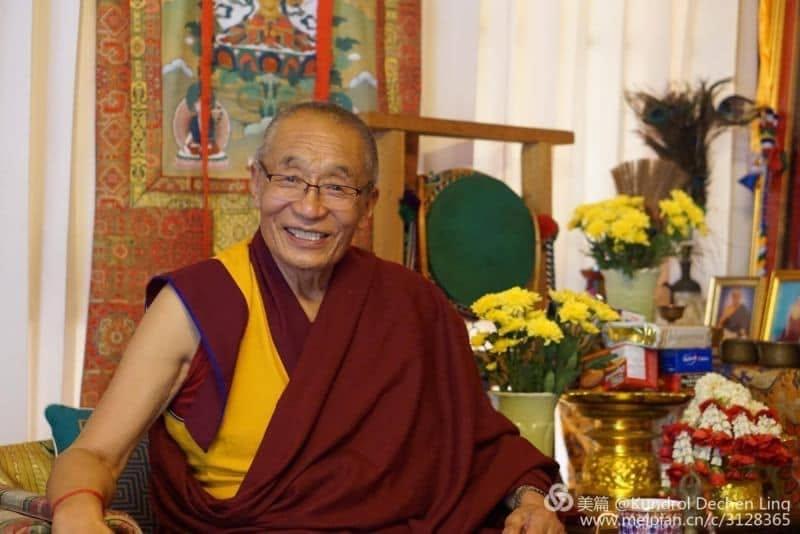
Tsulchen Thegchog Tempe Nyima Rinpoche
The Thirteenth Abbot of Tokden Monastery in Aba County, Amdo Tibet, Sichuan Province.
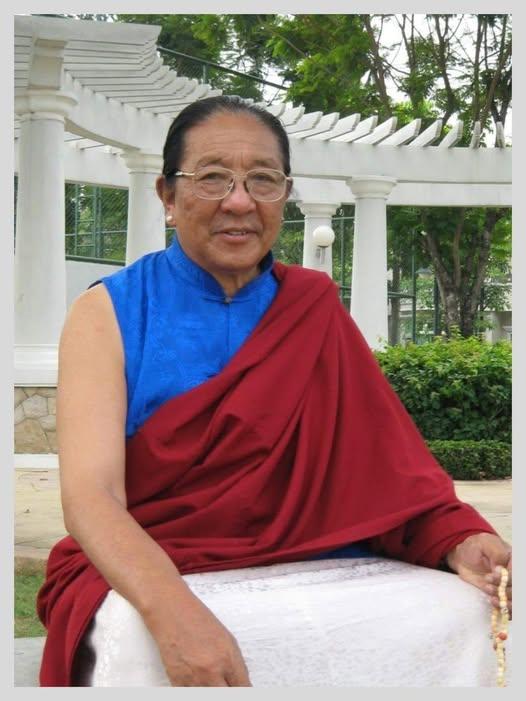
Kundrol Lhasey Rinpoche
Kundrol Mongyal Lhasey Tsognyi Gyamtso Rinpoche. One of our root gurus and lineage masters at Kundrol Dechen Ling.
Our objectives
Thousand Stars (Pandara) Foundation
Pandara is a Thai word meaning thousand stars. It originates from an aspiration to help young children in a nomad community in Tibet to get education, and from a vision to bring the light of wisdom, love and compassion to contemporary society. For a period of nearly two decades, Pandara plays an important role in promoting Tibetan wisdom in Thailand and enhances the growth of meditative contemplation in the Bon Buddhist tradition (Yungdrung Bon), which traces its lineage to Zhang Zhung. Pandara conducts courses and retreats along the three streams of teachings by the Buddha, namely Sutra, Tantra and Dzogchen. In particular, the foundation establishes the program of learning and practicing Dzogchen, the path to primordial mind by emphasizing the steps of meditation as practiced by Tibetan practitioners. Moreover, it organizes conferences and seminars to promote Tibetan art and culture, and encourage mutual understanding among the various Buddhist sects and other spiritual traditions.